
Retail Basics
High-Street Retail Shops Explained: Format, Footfall and Why Buyers Like Them
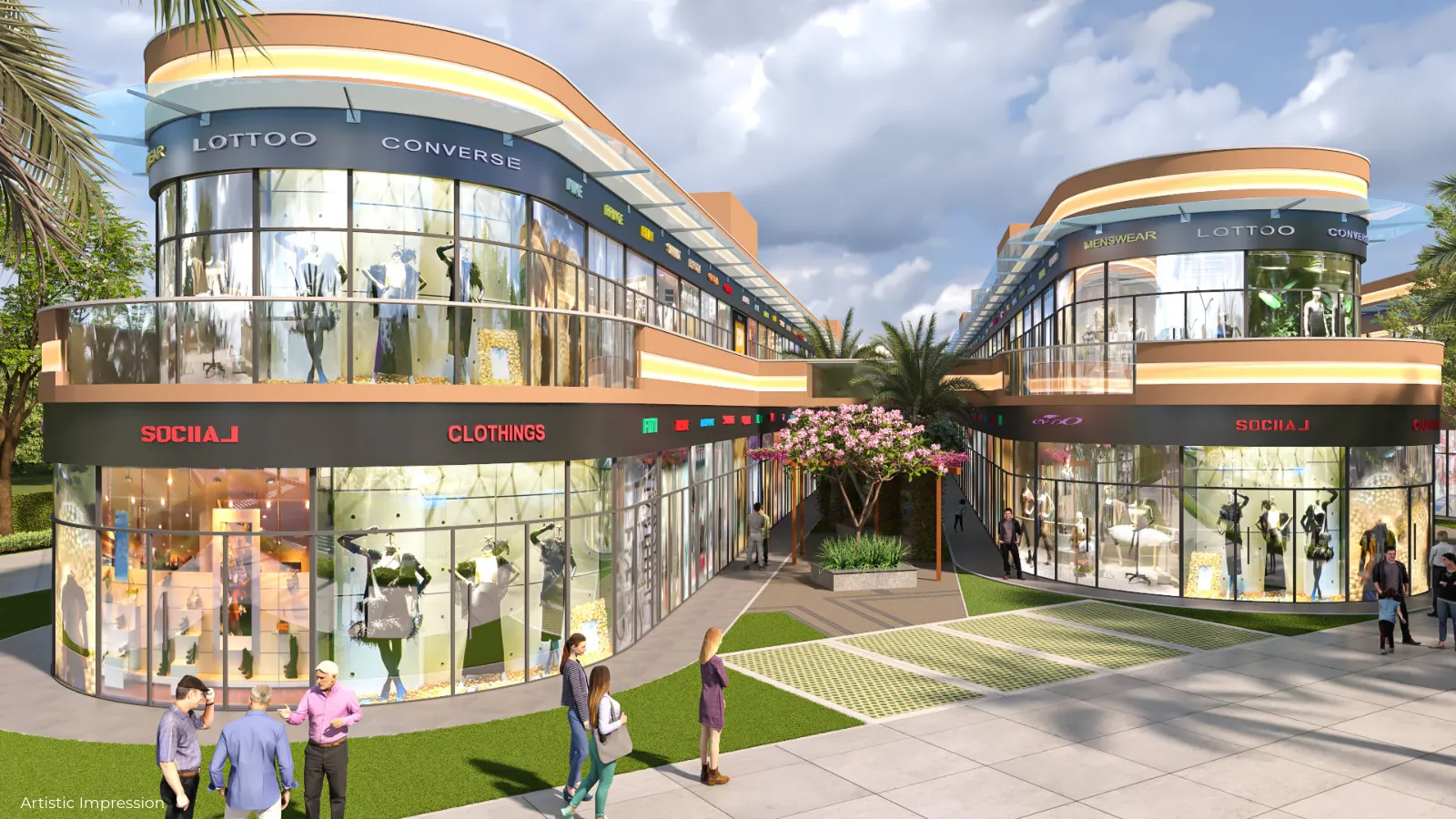
High-street retail means shops with direct street-facing frontage, usually arranged along a pedestrian or vehicular promenade. It is a familiar format in Indian cities and is now arriving in planned townships.
How it differs from a mall
In a mall, the operator controls tenant mix, timings and common areas, and shop owners often sell as part of a single complex. On a high street, each shop has its own entrance and signage, giving owners and tenants more visible frontage and flexible operating hours.
Why customers like them
Easy access, visible storefronts, nearby parking and the ability to hop between shops make high streets convenient for everyday shopping and dining.
The Swarnim Central design
Swarnim Central's artistic impressions show curved, glass-fronted two-level blocks around landscaped plazas and walkways, planned for food, fashion and lifestyle brands, inside a township with its own residents.
What to check as a buyer
- Frontage and visibility of your specific unit
- Parking and access
- Tenant mix plans
- Approvals and RERA details
Frequently asked questions
What is a high-street shop?
A shop with street-facing frontage and its own entrance, typically in a planned retail strip or promenade.
Is Swarnim Central a mall?
No. It is planned as a high-street retail destination with separate shop frontages.
Related guides
Disclaimer: This article is for general information and is not financial, legal or tax advice. Prices and terms are subject to change without notice; verify details with the developer and official RERA records. Images are artistic impressions. Returns are not guaranteed. HRERA Reg. No. HRERA-PKL-RWR-747-2025.